On Writing: A Memoir of the Craft Common
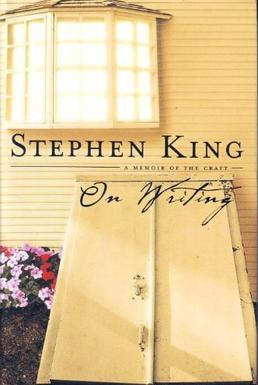
What it’s about
Part candid autobiography, part hands-on toolbox, this is Stephen King's account of how a hardscrabble Maine kid became one of the world's bestselling storytellers — and what he learned about the work along the way. King traces his formative years and writing life, then opens his "toolbox" with frank, practical guidance on vocabulary, grammar, plot, character, and the daily discipline of the craft. It is a book for anyone who reads voraciously and dreams of writing, delivered in King's plainspoken, generous, fiercely honest voice.
Significance King's signature nonfiction work on the writer's craft, written and reshaped around the 1999 van accident that nearly killed him; a perennial bestseller widely assigned in writing programs and frequently cited as one of the best books ever written about writing.
How to spot a true first 30-second check
A true 1st/1st needs BOTH the book and the jacket verified. A first-state jacket on a later or book-club book — or the reverse — is a married copy, not a first.
What to look for
- Demand the number line "1 3 5 7 9 10 8 6 4 2" — the '1' must be there; missing 1 = later printing.
- Confirm $25.00 on the front flap; a book-club copy has NO flap price (or reads 'Book Club Edition').
- Feel the trim: true first is the smaller ~5.9 x 8¾ in hardcover, lighter/thinner club copies differ.
- Book-club tell: blind-stamp (indented dot, usually rear board lower-right), glued not sewn, no number line.
- No Doubleday gutter code and no small-press precursor — the Scribner 2000 trade hardcover IS the true first.
- Watch married jackets, price-clips, ex-library stamps, and 'signed' copies without a credible COA.
Verified listings marker-checked
Each copy screened against the seller's own photos. ✓ confirmed = a photo shows the decisive marker; ⚠ not pictured = the shot to ask for before buying. Condition grades are as-pictured.
Buyer beware — verify before you buy. These are our screening opinions, read from each seller’s own photographs; we can misjudge a copy or misread an image. A listing marked “1st/1st confirmed” is not a guarantee — independently confirm the decisive book and jacket markers with the seller before any purchase. Authentication and the buying decision remain the buyer’s responsibility.

A Scribner first/first with both decisive tells legibly photographed on the one copy — the number line with its leading 1 and the unclipped $25.00 flap — with the book never shown out of its jacket, so the binding and endpapers stand unverified as corroboration only.
- Number line — Photo 6 shows the copyright-page row complete and sharp — "1 3 5 7 9 10 8 6 4 2" with the numeral 1 present at the left — the decisive book tell for a first printing.
- Copyright — Photo 6 carries the whole Scribner copyright page: flame device, 1230 Avenue of the Americas / New York, NY 10020, Copyright © 2000 by Stephen King, "Set in Garamond No. 3", Manufactured in the United States of America, and trade ISBN 0-684-85352-3.
- Jacket price — Photo 4 shows the front flap priced "U.S. $25.00 / Can. $37.00" at the head with the corner whole and unclipped — the decisive jacket tell, and a price the book-club jacket does not carry at all.
- Dust jacket — Photos 1, 3 and 2 show the correct text-forward Scribner jacket front, the lined-paper spine and the red rear panel, whose barcode 9 780684 853529 with the 52500 price code and ISBN 0-684-85352-3 corroborates the $25.00 trade issue rather than a club jacket.
- Binding — No frame shows the book out of its jacket, so the quarter-bound spine with its gilt titling over the boards is entirely unphotographed — ask the seller for the naked book, spine and both boards flat-on.
- Endpapers / edges — Neither the endpapers nor any edge of the text block appears in the six photos — ask for the front cover laid open to show the pastedown and free endpaper, plus a straight-down shot of the closed top edge.
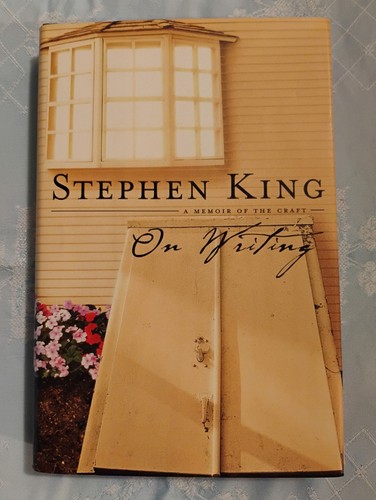
Genuine 1st/1st with the number line shown — a chipped jacket carrying two store stickers drags it to NF/VG; $21.95 is rich for that.
- Number line — Copyright page shows the full row "1 3 5 7 9 10 8 6 4 2" with the leading 1 present (photo 3) — the decisive first-printing tell.
- Jacket price — Front flap U.S. $25.00 / Can. $37.00, UNCLIPPED (photo 9) — correct first-state trade price, rules out the book-club copy.
- Binding — Correct quarter-bound trade boards: dark-brown gilt-lettered spine + Scribner flame over tan boards (photos 10-12).
- Dust jacket — Trade Scribner jacket: Tabitha King rear photo + PRINTED IN U.S.A. flap text — not a book-club jacket.
✓ Decisive marker pictured — nothing outstanding to request.
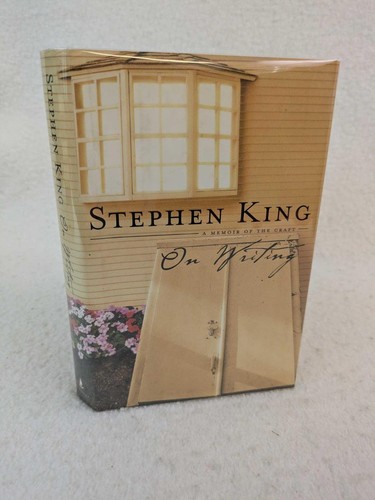
Confirmed 1st/1st, but a 'Merry Christmas 2000' gift inscription + a text-block stain cap it ~$15-22; $24.95 is at the ceiling.
- Number line — Copyright page shows the full row "1 3 5 7 9 10 8 6 4 2" with the numeral 1 present (photo 5) — the decisive Scribner first point.
- Jacket price — Front flap U.S. $25.00 / Can. $37.00, UNCLIPPED (photo 3); trade ISBN 0-684-85352-3 matches the rear barcode.
- Binding — Correct trade binding: black boards, gilt spine + Scribner flame, sewn signatures visible at head (photos 2, 6).
✓ Decisive marker pictured — nothing outstanding to request.
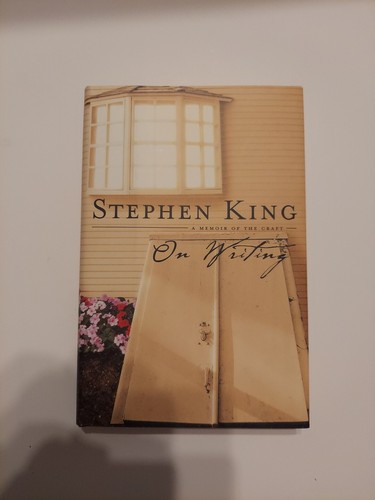
Number line confirms a genuine first, but the flap price was never shown — get the priced flap before paying $29.99 at top of range.
- Number line — Copyright page full and intact: "1 3 5 7 9 10 8 6 4 2" with the leftmost 1 present — the decisive first-printing tell.
- Copyright — (c) 2000 Stephen King; Scribner, Garamond No. 3; ISBN 0-684-85352-3 — correct first-edition imprint and ISBN.
- Dust jacket — Correct first-edition jacket art + gilt spine (King / On Writing / Scribner flame); trade title page w/ Dave's Rag facsimile facing.
- Jacket price — Front flap price never photographed — a possible $25.00 clip can't be ruled out; ask for the unclipped flap corner.
- Binding — Rear board and back-cover shots are soft/blurred — request sharp photos of corners and spine ends to confirm the NF grade.
Full identification detail & sourcescopyright · jacket · binding · book-club traps · print run · value · references
The trade hardcover Scribner 2000 IS the true first. No Donald M. Grant / Philtrum / Land of Enchantment precursor exists for this nonfiction title, and it was NOT a paperback original (the Scribner hardcover preceded the Pocket Books paperback). The Book-of-the-Month Club hardcover and the 2020 'Twentieth Anniversary Edition' are later, non-first issues.
First-printing points at a glance
Dust jacket
Front panel: title 'On Writing' with subtitle 'A Memoir of the Craft' and author name; clean, text-forward Scribner design typical of a craft/memoir title (not a horror-art jacket). Rear panel/flap carry memoir copy and an author photograph. Exact imagery/photographer UNVERIFIED.
Art / design: UNVERIFIED. Jacket/design credit is not reliably confirmed across sources (search results variously surfaced 'Lisa Litwak' and 'Shasti O'Leary' for Scribner-era King jackets; neither could be cross-confirmed specifically for On Writing). Do not rely on a designer attribution as a point.
Also watch for: Watch for: (1) Book-club hardcovers passed off as firsts — verify the "1 3 5 7 9 10 8 6 4 2" number line AND the $25.00 flap price (book-club lacks both). (2) Price-clipped jackets (corner cut) hide the price and reduce value. (3) Later trade printings (number line missing the 1) sold as firsts. (4) Married jackets — a club jacket on a trade book or vice versa; confirm the jacket price matches a trade first. (5) Ex-library copies (stamps/pockets/spine labels). (6) Bookseller 'signed' copies — autograph authenticity should carry a credible COA; King signatures are frequently forged. (7) Facsimile/reproduction jackets. The smaller trim size also helps confirm a genuine first vs. a rebound or club copy.
Print run & scarcity
Collector/dealer consensus figure (publisher never disclosed an audited count). stephenkingcollector.com (specialist King first-edition reference) on the On Writing first-edition page states verbatim: "A first edition of 500,000 copies.
First-state points & errata
No widely catalogued first-state typo/errata point separating states of the first printing is documented for this title. The strongest physical 'first' tell beyond the number line is the SMALLER TRIM SIZE: the true first measures ~5.9 x 8¾ inches (about 5.8 x 8.5 in), noticeably smaller than the standard King hardcover trim and than book-club copies — sellers list it as the 'smaller hardcover.' 288 pages.
Limited & signed editions
No publisher-issued signed/numbered/lettered slipcased or traycased limited edition of On Writing was released by Scribner in 2000. 'Signed first editions' on the market are bookseller-procured signed copies of the standard trade first printing (often later housed in custom dealer-made traycases with a COA — e.g., Veryfinebooks). The 2020 'On Writing: Twentieth Anniversary Edition' is a later commemorative trade issue, not a collectible limited and not a first.
Market value confirmed sales
$15–30 unsigned true first (fine/fine, unclipped)
Assumes a genuine first edition / first printing in near-fine to fine condition (clean copy, unclipped jacket). Lesser condition is worth less.
Confirmed sales: ~$3,500 — SIGNED first/first hardcover, LiveAuctioneers (Activity Auctions), recent. Dealer market for SIGNED firsts clusters $1,500–2,000: Very Fine Books $1,999 (signed page, fine/fine, w/COA + traycase); First and Fine and Raptis Rare Books list signed firsts in the same band. UNSIGNED true-first sold/retail comps: AbeBooks dealer copies repeatedly closing at $15–29 (fine/fine, first/first stated).
Book-club edition (the trap): $5–12. Book-club edition (Book-of-the-Month / Quality Paperback hardcover reprint) — effectively no collector value; routinely mislisted as "first edition." — a fraction of a true first; never pay first-edition money for one.
Condition matters less than usual here because the unsigned trade first is genuinely common — even a flawless fine/fine unclipped copy tops out around $30 retail; this is NOT a scarce book unsigned. The entire premium is the SIGNATURE: King signs infrequently, so an authentic signed first/first jumps to ~$1,200–2,000 (dealer) and $3,000+ at auction; a personal INSCRIPTION usually trades flat-to-slightly-under a clean flat signature for resale (collectors prefer the clean sig), while a dated 2000-era signature or full-name signature carries a modest premium. The SINGLE biggest thing separating a real first from the mislisted copies of THIS title: it has NO Doubleday/gutter code (that's a different publisher's points — ignore any "gutter code" claim here; this is a Scribner book). The real first is identified by (1) the number line reading "1 3 5 7 9 10 8 6 4 2" on the copyright page, (2) the $25.00 price present on the front jacket flap (price-CLIPPED kills value and hides BCE conversions), and (3) NO blind-stamp/embossed dot or square on the rear board and a barcode/price present — a clubbed copy has the smaller trim, no jacket price, and often a rear-board blind stamp. Quarter-bound black cloth over yellow boards is correct for the trade first. Because legit firsts are cheap, any "first edition" listed at $150–500 unsigned is an overpriced trap, and any cheap "signed first" with no COA/provenance should be treated as an autopen/forgery risk.
- https://www.abebooks.com/book-search/title/on-writing/author/stephen-king/first-edition/ (unsigned true-first retail $15–29, fine/fine)
- https://veryfinebooks.com/stephen-king-on-writing-signed-first-edition-printing-2000-COA/ (signed first/first, number line 1 3 5 7 9 10 8 6 4 2, $1,999)
- https://www.firstandfine.com/product/king-stephen-2000-on-writing-us-signed-first-edition/ (signed first, fine/unread)
- https://www.liveauctioneers.com/price-result/stephen-king-signed-on-writing-1st-edition-book/ (signed 1st/1st auction comp ~$3,500, Activity Auctions)
- https://www.nocloo.com/stephen-king-first-edition-books-identification-points/ (King first-edition point identification)
Sources
- https://stephenking.com/other/identifying_first_editions.pdf
- https://www.stephenkingcollector.com/1st/onwriting.html
- https://www.rarebookcellar.com/pages/books/97977/stephen-king/on-writing-a-memoir-of-the-craft
- https://veryfinebooks.com/stephen-king-on-writing-signed-first-edition-printing-2000-COA/
- https://en.wikipedia.org/wiki/On_Writing:_A_Memoir_of_the_Craft
- https://www.abebooks.com/book-search/title/on-writing/author/stephen-king/first-edition/
- https://www.stephenkingcollector.com/1st/onwriting.html